NFHS Wrestling Weight Classes 2025-26: Certification & Weights
Official 2025-26 NFHS wrestling weight classes, including the full boys 14-class set, alpha certification, hydration testing, and allowances.
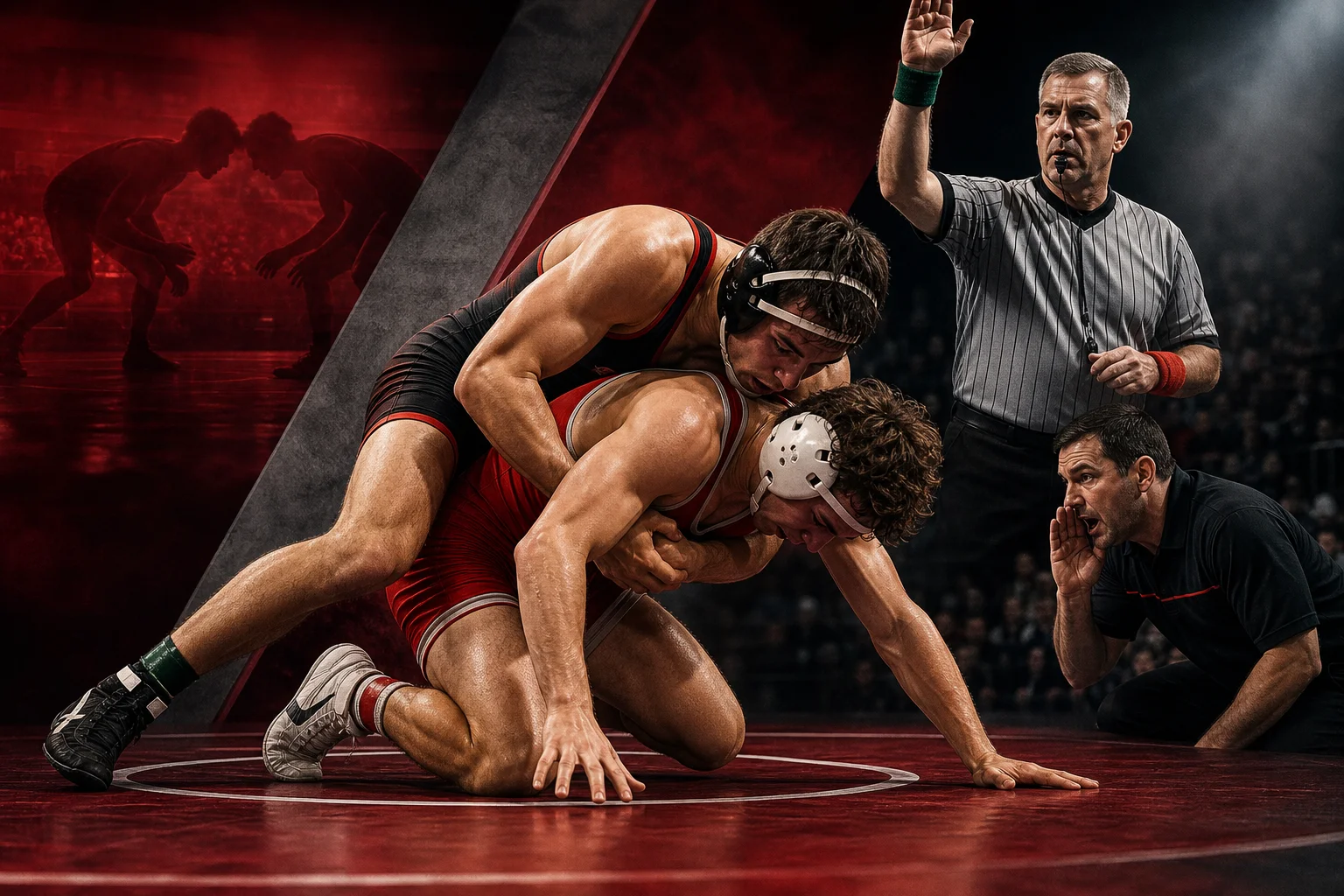
The NFHS weight-class system is designed to balance competitive equity with athlete safety. Coaches need the current weight list, but they also need to understand certification, hydration testing, alpha rosters, and state adoption.
Boys NFHS Weight Classes for 2025-26
NFHS now allows each state association to adopt a 12-, 13-, or 14-weight-class set for boys. The full current boys 14-class set is:
106, 113, 120, 126, 132, 138, 144, 150, 157, 165, 175, 190, 215, 285
This full set reflects the NFHS weight-class realignment effective in 2023-24 and remains current for 2025-26. Older upper-weight lists from before the realignment should not be used as the current full NFHS boys set.
Because states can adopt different class counts, coaches should confirm the state association’s competition series list before roster planning.
The Alpha Roster Process
Before a wrestler can compete in a dual meet or tournament, they must appear on the team’s alpha roster. The alpha certification process usually includes:
- Weight assessment.
- Hydration testing.
- Minimum weight certification.
- Roster submission to the state association system.
A wrestler who is not certified for a weight class may be barred from competing there even if they make weight on the day of competition.
Hydration Testing
The NFHS-endorsed weight management process uses urine specific gravity testing to discourage unsafe dehydration-based weight cutting.
USG cutoff: A urine specific gravity of 1.025 or lower is required for certification. A wrestler above that threshold is too dehydrated to certify safely at that weight and must follow the state’s recertification process.
Hydration testing is not a performance test. It is a safety screen designed to keep athletes from establishing a minimum weight while dehydrated.
Day-of Weigh-Ins
At most high school competitions, weigh-ins occur before the first round or dual meet start. State procedures control the exact timing and any second-chance weigh-in window.
Coaches should track:
- Certified minimum weight.
- Current eligibility by date.
- Allowance activation.
- State-specific weigh-in procedures.
- Whether a wrestler is allowed to move up or down under local rules.
The Allowance Rule
NFHS applies a 2-pound seasonal growth allowance effective January 1, added to every weight class. A wrestler certified at 132 may be allowed to weigh 134 after the growth allowance takes effect.
Keep the 2-pound seasonal growth allowance separate from the 1-pound consecutive-days-of-competition allowance. Check the state association’s wrestling manual before assuming any additional allowance applies.
Roster Planning Notes
The updated upper weights make roster planning different from the pre-realignment structure. Coaches should plan around the current full set:
- 144 and 150 are part of the current middle-weight sequence.
- 157 and 165 are part of the current upper-middle sequence.
- 175, 190, and 215 are part of the current upper-weight sequence.
- 285 remains the heavyweight class.
For broader rules context, see NFHS Wrestling Rules 2025-26. For dual-meet lineup strategy, see Dual Meet vs. Tournament Scoring: NFHS Wrestling Rules 2025-26.
For team roster management across weight classes, WrestleFlow Teams provides a live roster view with weight class assignments: teams.wrestleflow.com
Frequently Asked Questions
- What is the urine specific gravity cutoff for NFHS wrestling certification?
- NFHS and NWCA protocols require a urine specific gravity of 1.025 or below to certify at a given weight class. A reading above 1.025 indicates the wrestler is too dehydrated to certify safely at that weight.
- When does the 2-pound growth allowance kick in?
- The seasonal growth allowance is 2 pounds, effective January 1, and is added to every weight class. Keep it separate from the 1-pound consecutive-days-of-competition allowance.
- What are the boys' NFHS weight classes for 2025-26?
- The full boys 14-class NFHS set is 106, 113, 120, 126, 132, 138, 144, 150, 157, 165, 175, 190, 215, and 285.
- Can states use fewer than 14 boys weight classes?
- Yes. NFHS allows each state association to adopt a 12-, 13-, or 14-weight-class set for boys. The 14-class list is the full set.