The 12 Foundational Wrestling Takedown Drills Every Coach Should Teach
From level-change entries to high-crotch mechanics — the 12 core drills that build takedown offense at any level.
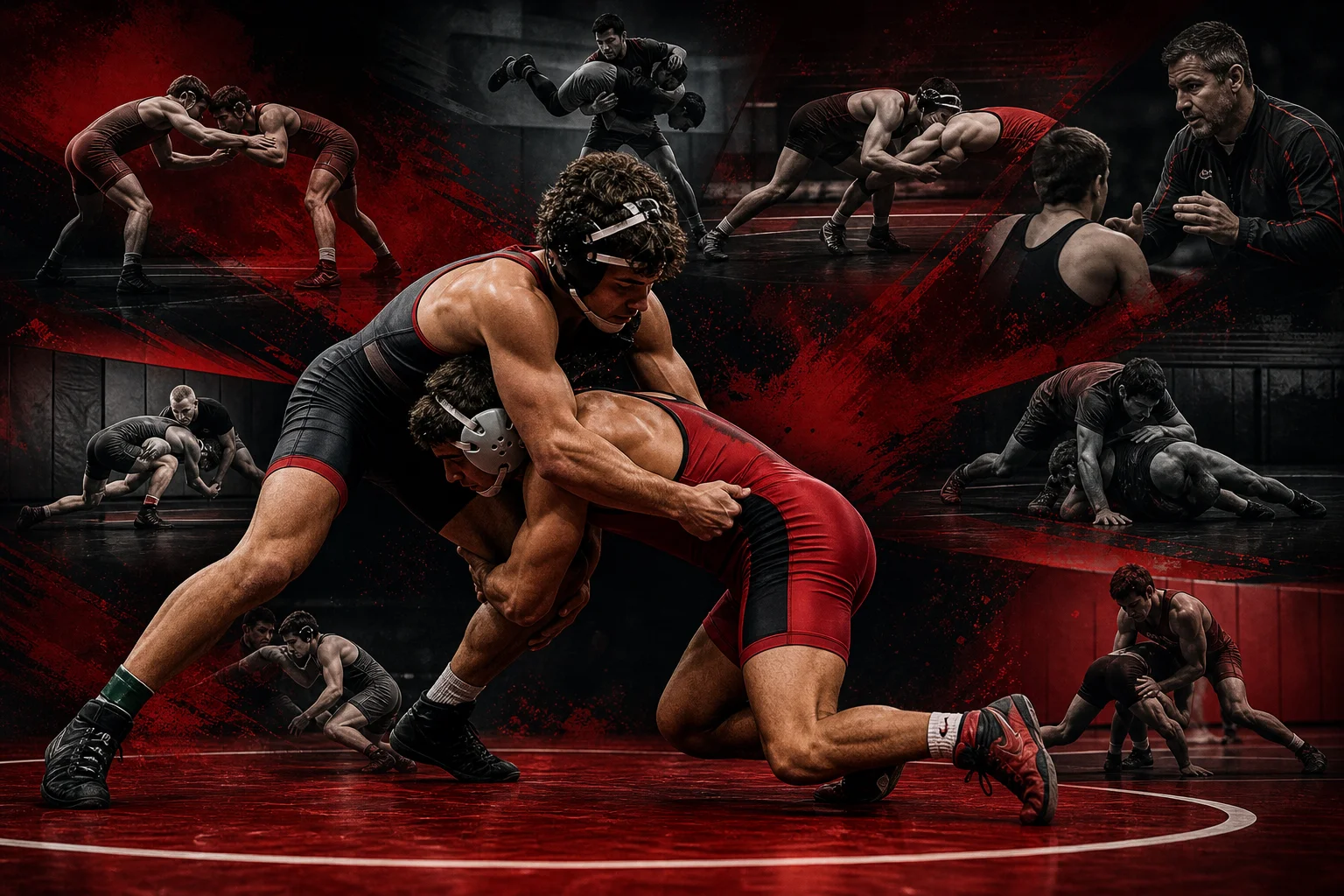
The 12 Foundational Wrestling Takedown Drills We’ve Tested for 2025—Not Flashy, They Actually Build Offense
Takedown offense is not built by teaching athletes 40 moves and hoping one appears in a match. It is built through repeatable positions: stance, motion, level change, penetration, angle, finish, cover, and immediate mat awareness.
For high school wrestling under NFHS rules, that matters more than ever. A takedown is worth three match points, so a wrestler who can create clean attacks, finish through resistance, and stay safe at the edge has a major scoring advantage. But the goal is not just “shoot more.” The goal is to train entries and finishes that hold up against pressure, ties, sprawls, short offense, and match fatigue.
The 12 drills below are the core takedown drills every coach should have in the room. They are not trick techniques. They are the daily building blocks behind single legs, high crotches, doubles, re-attacks, snap-downs, and go-behinds at every level.
Use them with beginners. Use them with varsity starters. Use them in preseason teaching, midseason maintenance, and postseason sharpening.
What Coaches Must Build Before Takedowns Work
A takedown is not one action. It is a chain.
The wrestler must:
- Hold a stance that can move and attack.
- Change levels without bending at the waist.
- Penetrate with hips under the body.
- Create an angle.
- Control a leg, hips, or upper body.
- Finish without exposing themselves to counters.
- Cover for control.
- Continue wrestling safely until the official awards the takedown or stops action.
Under NFHS rules, control is the key. Simply touching a leg is not a takedown. Driving an opponent to the mat without control may not be enough. Officials look for who has gained control, whether the action remains inbounds, and whether the finish is legal and safe.
That is why takedown drills must train more than the shot. They must train the full scoring action.
NFHS Rules and Safety Reminders for Takedown Drilling
Before getting to the drills, coaches should align technique with current high school rules and safety expectations.
Key NFHS concepts for takedown offense
| Situation | Coaching Point | Officiating/Rules Relevance |
|---|---|---|
| Neutral attack | Teach control, not just contact | A takedown is awarded when control is established from neutral |
| Takedown scoring | Finish and cover matter | NFHS takedowns are worth 3 points |
| Edge wrestling | Wrestle until the whistle, but stay legal | Action may continue while inbounds criteria are met; do not teach driving an opponent out to avoid wrestling |
| Lifts and returns | Return safely and under control | Slams and unnecessary roughness are illegal |
| Head position | Head up, eyes up, neck safe | Dangerous pressure on the neck can become potentially dangerous or illegal |
| Front headlocks | Control the arm with the head | Head-only pressure can create unsafe positions |
| Scramble finishes | Keep wrestling, avoid twisting joints | Officials may stop potentially dangerous action |
| Conditioning during shots | Build work capacity over time | Do not pair takedown volume with unsafe dehydration or crash weight cutting |
A responsible room teaches athletes to score hard without being reckless. High-intensity takedown drilling should be paired with hydration access, recovery planning, and sensible weight-management education. A wrestler who is drained, dizzy, or cramping is not getting better at finishing takedowns.
How to Use These 12 Drills in Practice
These drills can be used in three ways:
- Skill block: Teach one drill in detail for 8–12 minutes.
- Chain block: Pair two or three drills together to connect entry to finish.
- Conditioning block: Use familiar drills at match pace for short intervals.
For most teams, the best format is:
- Warm up with stance and motion.
- Drill entries without resistance.
- Add partner reactions.
- Finish against controlled resistance.
- Live wrestle from the position.
The table below gives a quick practice-design view before the detailed breakdown.
| # | Drill | Primary Skill | Best For |
|---|---|---|---|
| 1 | Stance-Motion-Pressure Drill | Base, movement, hand fight readiness | All wrestlers |
| 2 | Level Change Line Drill | Clean height change | Beginners to advanced |
| 3 | Penetration Step and Trail-Leg Recovery | Shot mechanics | Singles, doubles, high crotches |
| 4 | Knee-Pound to Pop-Up Drill | Hip recovery after penetration | Finishing through sprawls |
| 5 | Inside Tie to Level Change | Attacking from contact | Tie-based offense |
| 6 | Motion-to-Reattack Drill | Counter offense | Neutral exchanges |
| 7 | High-Crotch Entry to Cut-the-Corner | Core high-c mechanics | Varsity offense |
| 8 | Double-Leg Drive and Shelf Drill | Power finish with control | Younger wrestlers, lightweights, upper weights |
| 9 | Single-Leg Sweep and Run-the-Pipe Drill | Angle and single-leg finish | All levels |
| 10 | Crackdown Position Recovery Drill | Finishing from extended shots | Scramble situations |
| 11 | Snap-Down Go-Behind Drill | Front head offense | Hand-fighting wrestlers |
| 12 | Edge Finish and Safe Return Drill | Mat awareness, legal finishing | Match simulation |
1. Stance-Motion-Pressure Drill
Purpose
Every takedown begins with stance. If a wrestler’s feet are narrow, hands are lazy, or head is down, the attack is already compromised. This drill teaches athletes to move while staying ready to shoot, sprawl, circle, and hand fight.
Setup
Pair wrestlers by size. One partner gives light hand pressure while the other maintains stance and motion. The active wrestler moves for 20–30 seconds, then switches.
How to run it
The active wrestler must:
- Keep knees bent and chest over thighs.
- Keep elbows in and hands in front.
- Move feet without crossing over.
- Circle both directions.
- Respond to light pushes, pulls, and taps.
- Keep head position strong without butting or clubbing.
The partner gives realistic but controlled pressure: collar-tie taps, shoulder posts, wrist touches, and small shoves.
Coaching cues
- “Move your feet before you reach.”
- “Hands protect your legs.”
- “Head up, hips under you.”
- “Circle out of pressure.”
- “Do not stand up between motions.”
Common errors
Beginners often bounce up and down instead of moving efficiently. Varsity wrestlers may get casual because the drill feels basic. Demand match stance. A wrestler who cannot stay disciplined for 30 seconds in stance will struggle late in a match.
Progression
Add a whistle cue. On the whistle, the active wrestler must level change, sprawl, or circle hard. This builds reaction without turning the drill into sloppy live wrestling.
2. Level Change Line Drill
Purpose
Bad shots usually start with bad level changes. Athletes bend at the waist, drop their head, or reach from too far away. This drill isolates the level change so athletes learn to lower with their legs.
Setup
Line wrestlers across the mat with space between them. No partner needed at first.
How to run it
On the coach’s command, wrestlers:
- Start in stance.
- Lower their hips by bending knees.
- Keep chest up.
- Keep eyes forward.
- Hold for one count.
- Return to stance without popping straight up.
Run sets of 8–12 reps.
Coaching cues
- “Hips down, chest up.”
- “Do not bow.”
- “Your head should not dive below your hands.”
- “Change levels before you step.”
Why it matters
A level change is not a shot by itself. It is the setup for penetration. Wrestlers who skip this step often reach, get sprawled on, or put their neck in danger.
Progression
Add motion. Wrestlers circle, fake, and level change on command. Then add a partner holding a light collar tie or wrist tie so athletes learn to level change from contact.
3. Penetration Step and Trail-Leg Recovery
Purpose
The penetration step is the engine of leg attacks. The trail leg recovery is what allows the wrestler to keep driving, change direction, or finish.
Setup
Use lines across the mat or partners as targets. For beginners, place a cone, shoe, or tape mark as the target.
How to run it
The wrestler:
- Starts in stance.
- Level changes.
- Steps the lead foot between the opponent’s feet or to the correct attack lane.
- Drops the lead knee lightly to the mat if teaching a knee-pound style shot.
- Brings the trail leg up quickly.
- Finishes in strong position with hips under the chest.
Do not let athletes slam their knees into the mat. The knee touch should be controlled.
Coaching cues
- “Step first, then knee.”
- “Back foot catches up.”
- “Do not leave your hips behind.”
- “Hands attack as your feet move.”
- “Head up through the finish.”
Common errors
The biggest mistake is reaching with both hands while the feet stay outside. The second is leaving the trail leg stretched behind the body. That creates an extended position where the opponent can sprawl, circle, and score.
Progression
Add a partner giving a realistic stance. The shooter must step to the correct lane: outside for sweep single, between the feet for double, deeper angle for high crotch.
4. Knee-Pound to Pop-Up Drill
Purpose
Many wrestlers can shoot in the air but cannot recover when the opponent sprawls. This drill teaches athletes to move from a knee penetration position back to their feet without losing posture.
Setup
Partners face each other. The shooter takes a controlled penetration step to a leg. The defender gives light hip pressure or down pressure.
How to run it
The shooter:
- Penetrates to the leg.
- Keeps head and chest up.
- Brings the trail leg forward.
- Pops to both feet while maintaining leg control.
- Finishes in a strong drive position.
The defender does not fully sprawl at first. The goal is position recovery, not stopping the shot.
Coaching cues
- “Do not hang on your knee.”
- “Bring your hips to the leg.”
- “Elbows tight.”
- “Back straight, head up.”
- “Feet under you before you drive.”
Rules and safety tie-in
This drill prevents dangerous extended positions where the shooter’s neck and shoulders carry too much weight. Officials are alert to potentially dangerous positions, especially when joints or the neck are stressed. Coaches should stop any rep where the athlete’s head is trapped under the defender’s weight.
Progression
Increase resistance. The defender sprawls to 50 percent, then 75 percent. The shooter must pop up and move to a finish rather than freezing underneath.
5. Inside Tie to Level Change
Purpose
Wrestlers rarely get clean leg attacks from open space against good opponents. They must learn to attack from ties. This drill connects hand fighting to level change.
Setup
Partners begin in an inside tie or collar-and-inside tie position. The offensive wrestler has one inside tie and one wrist or elbow control.
How to run it
The offensive wrestler:
- Creates pressure with the tie.
- Moves the opponent’s feet.
- Pulls or posts just enough to open a lane.
- Level changes while staying connected.
- Enters on a single, high crotch, or double.
At first, stop at the entry. Later, finish the takedown.
Coaching cues
- “Move them before you shoot.”
- “Do not stare at the leg.”
- “Hands create the lane.”
- “Level change under the tie, not away from it.”
- “Attack as their foot steps.”
Common errors
Athletes often hold ties without purpose. A tie is not a resting place. It should create motion, pressure, angle, or reaction.
Progression
Let the defender circle, post, or pull. The offensive wrestler must feel when the leg becomes available. This turns the drill into a timing drill rather than a memorized step.
6. Motion-to-Reattack Drill
Purpose
Great takedown wrestlers score after the first attack fails. They also score when the opponent attacks poorly. This drill trains re-attacks: down-block to go, sprawl to score, and circle to leg.
Setup
Partners start in neutral. One wrestler gives a controlled attack. The other defends and immediately re-attacks.
How to run it
Example sequence:
- Partner A takes a light single-leg shot.
- Partner B down-blocks and circles.
- Partner B immediately attacks a high crotch, single, or go-behind.
- Partner A gives realistic resistance but does not turn it fully live.
Switch every rep or every 30 seconds.
Coaching cues
- “Defense is offense.”
- “Circle while you block.”
- “Re-attack before they recover.”
- “Hands and feet together.”
- “Do not admire your sprawl.”
Why it matters
Many high school matches are won by the wrestler who scores on the second action. If athletes only practice perfect first attacks, they are not ready for real exchanges.
Officiating angle
Officials judge control based on the full action. A wrestler who sprawls, circles behind, and covers may earn a takedown when control is established. Coaches should teach athletes to keep wrestling until the position is clearly controlled or the whistle sounds.
7. High-Crotch Entry to Cut-the-Corner
Purpose
The high crotch is one of the most important attacks in wrestling because it creates angles and transitions naturally to doubles, singles, lifts, and finishes. But poor high-crotch mechanics lead to chest-down shots and easy counters.
Setup
Partners start in stance. The offensive wrestler may begin from an inside tie, wrist control, or open motion.
How to run it
The attacker:
- Level changes.
- Penetrates to the opponent’s lead leg.
- Places the head tight to the ribs or side of the torso, depending on coaching system.
- Locks around the thigh above the knee.
- Brings the trail leg up.
- Cuts the corner by stepping around and turning the opponent’s hip.
- Finishes with control.
Coaching cues
- “Shoulder to thigh.”
- “Ear tight, head up.”
- “Trail leg up now.”
- “Turn the corner, do not push straight through.”
- “Cover the hips after the finish.”
Common errors
The most common error is shooting straight forward and stopping under the opponent. A high crotch is an angle attack. If the athlete’s feet stop, the defender’s sprawl wins.
Another error is locking too low around the knee. That weakens control and may stress the defender’s joint if the attacker twists. Teach control above the knee and finish by moving the feet, not by cranking the leg.
Progression
Add three finishes:
- High crotch to double.
- High crotch to shelf and run.
- High crotch to back-door finish if the defender sprawls hard.
8. Double-Leg Drive and Shelf Drill
Purpose
The double leg teaches commitment, body position, and drive. At the high school level, it is also one of the easiest attacks to make unsafe if athletes lift without control or drive through the opponent wildly. This drill teaches a strong, legal finish.
Setup
Partners begin in stance. The offensive wrestler attacks a double leg at controlled speed.
How to run it
The attacker:
- Level changes.
- Penetrates with the lead knee between or near the opponent’s feet.
- Wraps behind both knees or thighs.
- Keeps head up and tight.
- Brings trail leg forward.
- Drives across the opponent at an angle.
- Shelves the legs by bringing them together or lifting slightly under control.
- Covers hips for control.
Coaching cues
- “Head up, back straight.”
- “Run your feet.”
- “Angle, not straight back.”
- “No launching.”
- “Cover before you celebrate.”
NFHS safety reminder
A forceful return or uncontrolled lift can become illegal. Coaches should never teach athletes to dump an opponent on the head, neck, or shoulder. The finish should bring the opponent safely to the mat with the attacker maintaining control.
Progression
Start with a crash-pad only if teaching controlled lift mechanics, then move to mat finishes at low amplitude. Most high school rooms do not need big lifts to develop effective doubles. Angled drive, leg control, and hip cover are enough to score consistently.
9. Single-Leg Sweep and Run-the-Pipe Drill
Purpose
The single leg is a core attack because it works from space, ties, re-attacks, and scrambles. This drill teaches athletes to create an angle, control the leg, and finish without getting stretched out.
Setup
Partners start in a staggered stance. The attacker targets the lead leg.
How to run it
The attacker:
- Circles to create the angle.
- Level changes.
- Steps outside or diagonally to the lead leg.
- Captures the leg with head inside or head outside, depending on the team’s system.
- Comes to the feet.
- Runs the pipe by stepping back, rotating, and bringing the defender’s hip down.
- Covers for control.
Coaching cues
- “Angle first.”
- “Do not reach from space.”
- “Pinch the leg.”
- “Shoulder pressure matters.”
- “Step and rotate, do not twist the knee.”
Common errors
Athletes often try to finish by pulling the foot. That can be weak and unsafe. The finish comes from controlling the leg, pressuring the hip, and moving the feet.
Progression
Add reactions:
- Defender hops.
- Defender whizzers.
- Defender tries to square hips.
- Defender pushes head down.
The attacker must adjust: run the pipe, shelf the leg, switch to double, or climb to a higher finish.
10. Crackdown Position Recovery Drill
Purpose
Even well-coached wrestlers end up extended. The crackdown position happens when the attacker is on a leg but stretched to the mat, often with the defender sprawling or applying hip pressure. This drill teaches recovery instead of panic.
Setup
Begin in a controlled crackdown: attacker has one leg; defender has hips heavy but not crushing the neck or shoulder.
How to run it
The attacker works through a sequence:
- Keep the leg trapped.
- Get the head to a safe position.
- Build to an elbow.
- Bring knees under the body.
- Climb up the leg or switch to a corner.
- Finish or force a stalemate-type position in live wrestling.
The defender gives progressive resistance.
Coaching cues
- “Do not let go just because it got hard.”
- “Head safe first.”
- “Build your base.”
- “Climb up the leg.”
- “Win the next inch.”
Safety priority
This drill must be monitored. Do not allow defenders to sit hard across the neck, twist the spine, or trap the shoulder in a way that places the attacker at risk. Stop and reset if the position becomes potentially dangerous.
Why it matters
Many matches turn on these positions. A wrestler who can recover from a stretched shot is harder to score on and more likely to finish late in periods.
11. Snap-Down Go-Behind Drill
Purpose
Not every takedown has to come from a leg shot. Snap-downs punish poor stance, heavy hands, and bad head position. They also give wrestlers a lower-risk way to score when opponents overreact to leg attacks.
Setup
Partners begin in collar tie, inside tie, or forehead-to-forehead hand-fighting position.
How to run it
The attacker:
- Pulls or snaps the opponent’s head and arm toward the mat.
- Circles immediately.
- Controls the near arm, elbow, or chin-and-arm position safely.
- Moves behind the hips.
- Covers for control.
Coaching cues
- “Snap with your feet, not just your arms.”
- “Circle as the head drops.”
- “Control an arm.”
- “Chest over hips when you cover.”
- “Do not hang on the head.”
NFHS rules and safety angle
Front headlock positions must be coached carefully. Teach athletes to control an arm with the head and avoid neck cranks or choking pressure. Officials will stop potentially dangerous action and may penalize illegal holds or unnecessary roughness.
Progression
Add three reactions:
- Defender posts a hand.
- Defender squares up.
- Defender shoots after the snap.
The attacker learns to go behind, re-snap, or spin to the opposite side.
12. Edge Finish and Safe Return Drill
Purpose
A large number of takedown opportunities happen near the boundary. Wrestlers must learn to finish while staying legal, safe, and aware of the whistle.
Setup
Start with both wrestlers near the edge of the mat. The attacker begins on a single, double, or high crotch. The defender gives realistic edge resistance.
How to run it
The attacker:
- Recognizes mat position.
- Circles in when possible.
- Keeps control of the leg or hips.
- Finishes without driving recklessly out of bounds.
- Covers immediately if action remains inbounds.
- Stops on the whistle.
Coaching cues
- “Circle back to the center.”
- “Finish in bounds.”
- “Do not shove them out.”
- “Control the return.”
- “Wrestle until the whistle.”
Official’s perspective
Officials must decide whether action remains inbounds, whether control has been established, and whether either wrestler has committed a violation such as fleeing, unnecessary roughness, or an illegal return. Coaches can help athletes by drilling edge positions in a way that matches real officiating expectations.
Progression
Run short live goes from the edge:
- 10 seconds from single leg.
- 10 seconds from high crotch.
- 10 seconds from front headlock.
- 10 seconds from double-leg drive position.
Score only clean, controlled finishes.
Building a Weekly Takedown Drill Plan
The best rooms do not run all 12 drills every day. They rotate them with intent.
Sample weekly structure
| Practice Day | Focus | Recommended Drills |
|---|---|---|
| Monday | Stance, motion, clean entries | 1, 2, 3, 5 |
| Tuesday | High-crotch and double finishes | 3, 7, 8, 12 |
| Wednesday | Single-leg offense and recovery | 4, 9, 10 |
| Thursday | Re-attacks and front head offense | 6, 11, 12 |
| Friday | Match simulation | 5, 6, 7, 9, 12 |
This structure keeps the athletes improving without overloading them with too many techniques at once.
How Much Resistance Should Coaches Use?
The answer depends on the goal of the drill.
No resistance
Use this when teaching brand-new mechanics. The athlete should be able to perform the motion correctly before a partner tries to stop it.
Light resistance
Use this once the athlete understands the movement. The partner gives realistic pressure but allows success.
Moderate resistance
Use this for varsity development. The attacker must earn position, but the defender is not fully live.
Live resistance
Use this after the skill has been taught, drilled, and corrected. Live wrestling exposes timing problems, conditioning gaps, and poor habits.
A common mistake is going live too early. Another mistake is never going live at all. Takedown skill needs both clean repetition and pressure-tested application.
Coaching Corrections That Apply to Every Takedown Drill
No matter which drill you run, these corrections show up constantly.
Head position
Bad head position kills attacks and creates safety risks. Athletes should keep the head up, neck strong, and eyes forward whenever possible. In leg attacks, the head should be tight to the body, not hanging in space.
Hip position
If the hips are far behind the shoulders, the attack is weak. The hips must come under the wrestler during penetration and recovery.
Foot movement
A takedown finish is usually won by feet, not arms. If the feet stop, the finish stalls.
Hand control
Hands should connect to a leg, hip, arm, or tie with purpose. Loose hands lead to scrambles the attacker does not control.
Cover after the finish
Many athletes finish the hard part, then fail to cover. Under NFHS scoring, control is what earns the takedown. Teach athletes to cover hips, secure control, and keep wrestling.
Practice Design for Different Levels
Youth and first-year wrestlers
Keep drills short and simple. Focus on stance, level change, penetration, and safe finishes. Avoid complicated scramble positions until athletes can protect themselves and understand body control.
Best starting drills:
- Stance-Motion-Pressure
- Level Change Line Drill
- Penetration Step and Trail-Leg Recovery
- Double-Leg Drive and Shelf Drill
- Snap-Down Go-Behind Drill
Junior varsity wrestlers
JV athletes need repetition and positional awareness. They often know the move but lose position when the defender reacts.
Best focus drills:
- Inside Tie to Level Change
- Knee-Pound to Pop-Up
- Single-Leg Sweep and Run-the-Pipe
- Motion-to-Reattack
- Edge Finish and Safe Return
Varsity wrestlers
Varsity athletes need timing, resistance, and chain wrestling. They should drill from ties, failed attacks, sprawls, edge positions, and short-time situations.
Best focus drills:
- High-Crotch Entry to Cut-the-Corner
- Motion-to-Reattack
- Crackdown Position Recovery
- Edge Finish and Safe Return
- Single-Leg reaction chains
Short-Time Takedown Drilling
Coaches should regularly put athletes in short-time situations. A wrestler who can score with 1:45 left in the period still has work to do if they panic with 12 seconds left.
Use these scenarios:
- Down by two, 15 seconds left, neutral.
- Tied match, 20 seconds left, opponent backing up.
- Up by one, 10 seconds left, opponent attacks.
- Near the edge, 8 seconds left, single leg secured.
- Overtime neutral start.
The point is not to teach athletes to rush blindly. The point is to help them recognize when to attack, when to re-attack, and how to finish cleanly under pressure.
Conditioning Without Sloppy Wrestling
Takedown drilling can condition athletes, but fatigue should not destroy technique. Once athletes are too tired to protect position, the drill becomes less useful and more risky.
Better options:
- 20-second high-quality goes with full recovery.
- 30-second positional goes from a leg.
- Partner rotation to keep pace high.
- Short live rounds from specific takedown positions.
- Technical circuits with coach correction.
Avoid using takedown drills as punishment. When athletes associate shots with punishment, technique often gets worse. Conditioning should support wrestling skill, not replace it.
Athlete health also matters during long practices and tournament weeks. Coaches should encourage normal hydration, post-practice recovery, sleep, and responsible nutrition. Takedown volume should not be paired with extreme weight-cutting behaviors. A tired wrestler can still improve; a depleted wrestler is at higher risk and less able to learn.
What Officials Want Wrestlers and Coaches to Understand
Officials are not judging whether a move “looked like” a takedown. They are judging control, position, legality, and safety.
For takedown situations, officials are watching:
- Did the attacking wrestler gain control?
- Are both wrestlers still in a position where wrestling can continue?
- Is the action inbounds under NFHS criteria?
- Was there unnecessary roughness?
- Was the return safe?
- Did either wrestler flee the mat or avoid wrestling?
- Did a potentially dangerous position develop?
Coaches who teach clean finishes make the official’s job easier and help athletes avoid frustration. If a wrestler habitually releases too early, fails to cover, or finishes out of control, close calls will not always go their way.
The Core Message: Drill Positions, Not Just Moves
The 12 drills in this article are not separate islands. They connect.
A wrestler level changes into a penetration step. The penetration step becomes a high crotch. The high crotch turns into a double. The defender sprawls, so the attacker recovers from crackdown. The opponent attacks back, so the wrestler re-attacks. The action reaches the boundary, so the wrestler circles in and finishes safely.
That is takedown wrestling.
The best coaches do not simply ask, “What move are we teaching today?” They ask:
- What position are we trying to win?
- What reaction are we preparing for?
- What finish creates control?
- What safety issue must we prevent?
- How will this be scored under high school rules?
If your athletes can answer those questions with their wrestling, your takedown offense will grow.
For coaches building practice plans, drill libraries, and repeatable team systems, WrestleFlow Teams is built for this kind of work. Use it to organize takedown drills, create coach playbooks, plan weekly skill progressions, and keep your staff aligned from youth practices through varsity competition.